Your brand outside. VisitSend core underneath.
Shape the customer-facing identity and the operational moments that make your company different, without maintaining a disconnected software product.

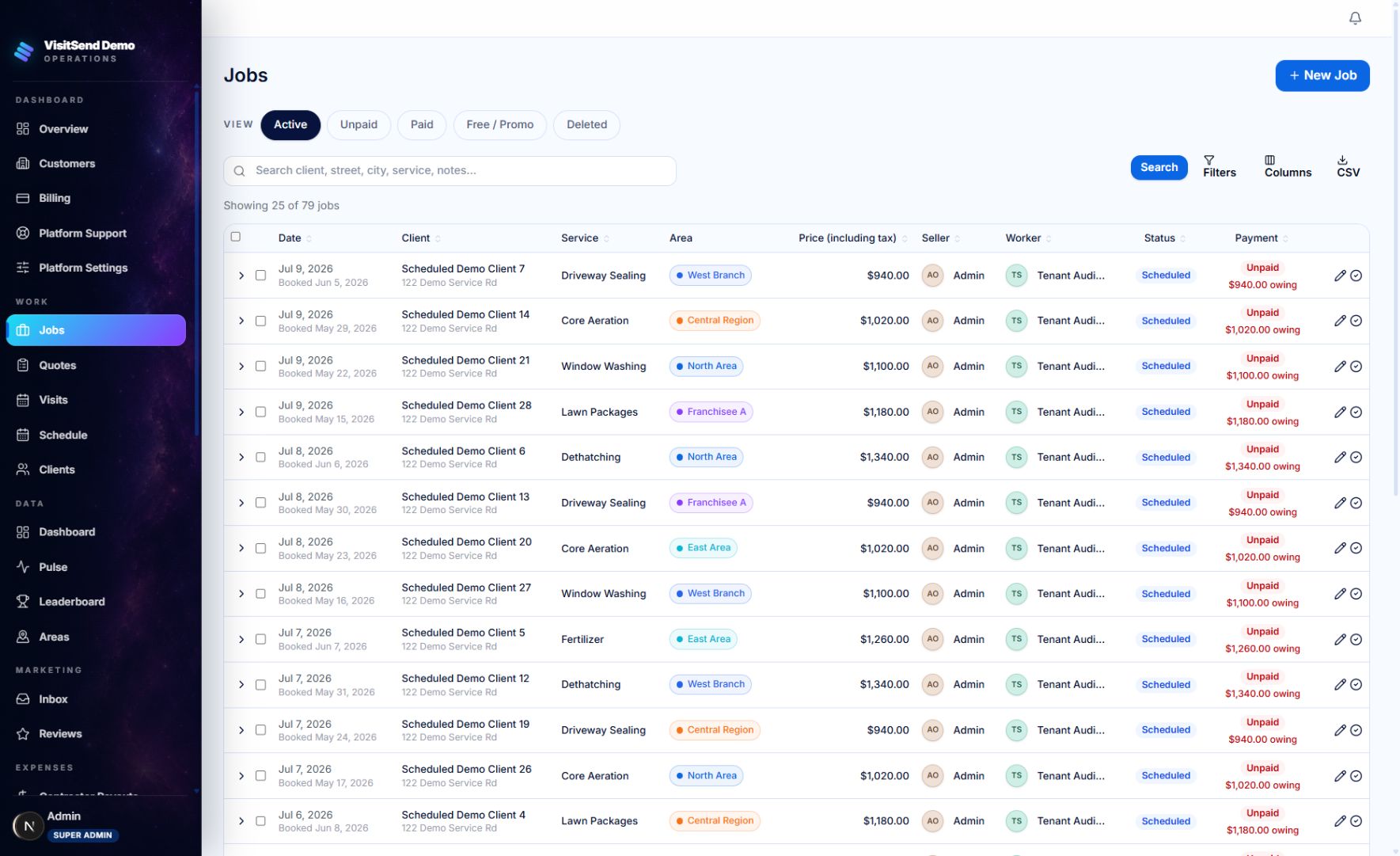
Tailor the moments people actually feel.
A Custom App is not a color swap. It is a deliberate fit between the brand customers recognize and the operating rules the team relies on.
Brand surface
- App name and identity
- Custom domain
- Onboarding and sender details
Workflow fit
- Purpose-built forms
- Tailored calculations
- Business-specific modules
Control
- Role and permission design
- Reports and exports
- Feature rollout rules
Continuity
- Shared security work
- Reviewed releases
- One maintained core

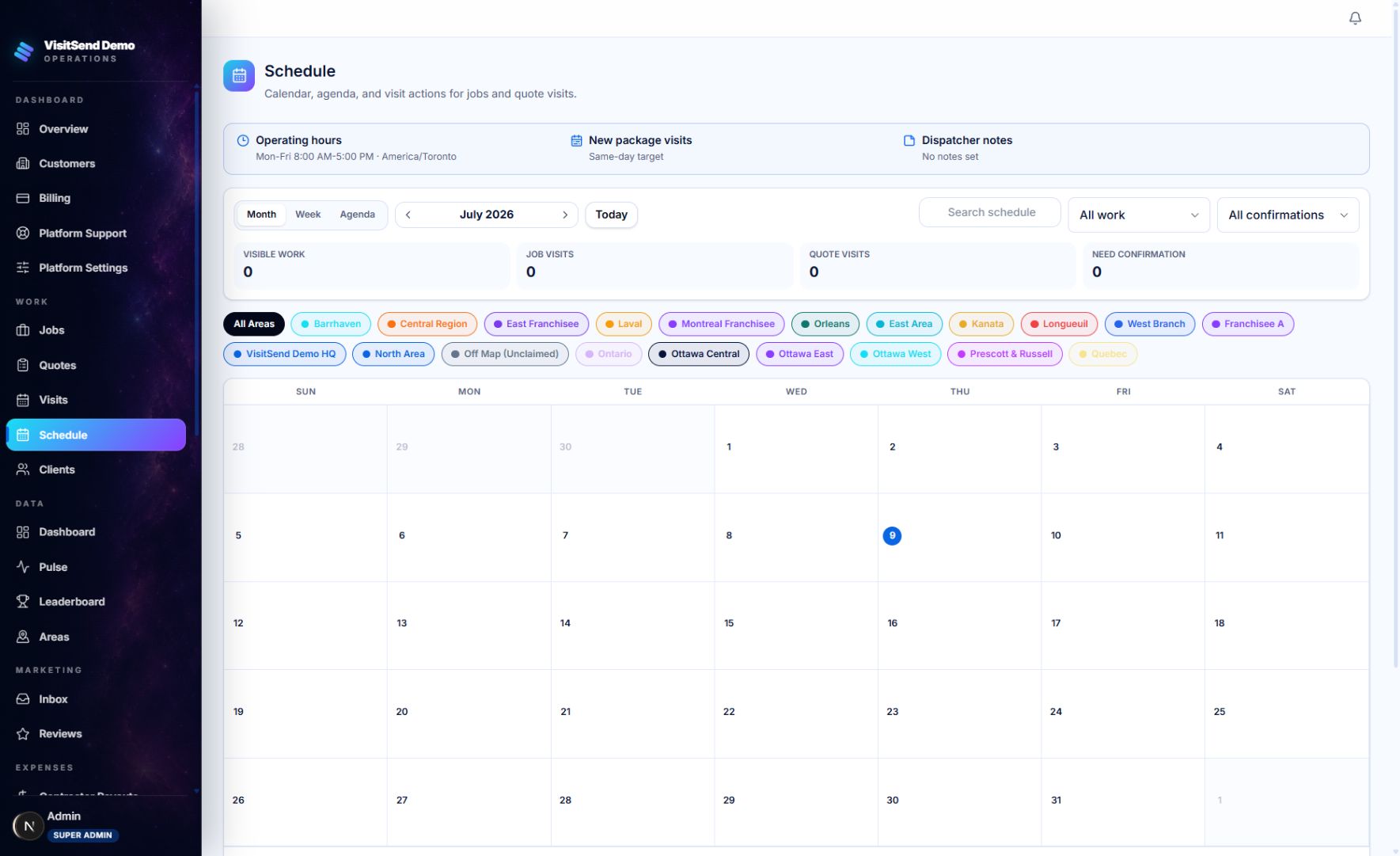
Custom where it matters. Common where it should be.
The strongest custom system keeps proven platform behavior intact and spends custom effort only on the brand, decisions, and workflow moments that create real operating value.
- Start with VisitSend features that already solve the job
- Use configuration for brand, access, areas, and operating choices
- Build a thin custom layer only where the workflow truly differs
One request. Three ownership choices.
Every idea is placed where it can stay easiest to operate, verify, and improve.
Useful to every VisitSend customer
Build it once in the core so every eligible Custom App can receive the improvement.
Different by brand or operation
Represent the choice through settings, permissions, content, areas, and rollout controls.
Unique to the business model
Use a focused module when configuration cannot express the workflow clearly or safely.
A scope you can understand before the build.
Clarity comes first so the app stays coherent for customers, operators, and future releases.
Map the operating difference
Identify the moments a standard plan cannot represent clearly enough.
Separate configuration from custom work
Keep common behavior on the shared core and reserve build effort for real differentiation.
Agree on rollout and review
Define the branded surface, release path, verification, and ongoing scope before build work starts.
Standard plan or Custom App?
Choose a standard plan when VisitSend already matches the operating model. Scope a Custom App when the branded surface or core workflow is meaningfully different.